A HOLE IN THE HEAD
The image below is a photo of the exhibit panel. Following it is a transcript of the panel.
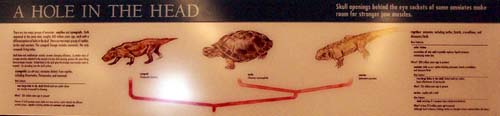
Skull openings behind the eye sockets of some amniotes make room for stronger jaw muscles.
There are two major groups of amniotes:
reptiles
and
synapsids
. Both appeared at the same time, roughly 300 million years ago, each with a different pattern of holes in the skull. There are two major groups of reptiles: turtles and saurians. The synapsid lineage includes mammals, the only synapsids living today.
Skull holes and modified jaw muscles increase chomping efficiency. A smaller mass of stronger muscles, attached to the margins of a new skull opning, produce the same biting force as larger muscles. Arched holes in the skull give the stronger new muscles room to expand -- by spreading onto the skull surface.
synapsids
(sin-
AP
-sidz): amniotes distinct from reptiles, including
Dimetrodon, Thrinaxodon, and mammals
New feature:
- one large hole in the skull behind each eye socket allows jaw muscles to expand for chewing
When? 300 million years ago to present
Patterns of skull openings remain stable over time and are used to identify the different amniote groups:
reptiles
(including
turtles
and
saurians
) and
synapsids
.
reptiles:
amniotes, including turtles, lizards, crocodilians, and dinosaurs/birds
New features:
- color vision
- excretion of uric acid crystals replaces liquid urination, minimizing water loss
When? 300 million years ago to present
saurians
(
SOR
-ee-unz): reptiles including pterosaurs, lizards, crocodilians, and dinosaurs/birds
New feature:
-
two large holes in the skull
, behind each eye socket, boost effectiveness of jaw muscles
When? 225 million years ago to present
turtles:
reptiles with a shell
New feature:
- shell consisting of a carapace (top) and plastron (bottom)
When? at least 215 million years ago to present
(Although fossil evidence is lacking, turtles are thought to have evolved before this date.)
PICTURE CAPTIONS:
-
synapsid
Thrinaxodon liorhinus -
saurian
Sphenodon punctatus
Click on image below to see Dimetrodon web page.