CRUNCHERS AND MUNCHERS
The image below is a photo of the exhibit panel. Following it is a transcript of the panel.
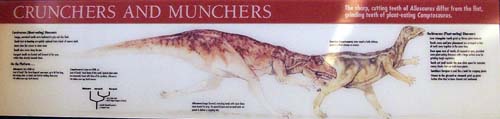
The sharp, cutting teeth of
Allosaurus
differ from the flat, grinding teeth of plant-eating
Camptosaurus
.
Carnivorous (Meat-eating) Dinosaurs
-
Large, serrated teeth
curve backward to grip and slice flesh.
Tooth lost in hunting are quickly replaced from a bank of reserve teeth.
Jaws close like scissors to shear meat.
Tooth size varies along the jaw.
Largest teeth are located well forward of the eyes, rather than directly beneath them.
On the Platform...
-
Allosaurus
(al-o-
SOR
-us)
(cast of fossil) This three-fingered meat-eater, up to 40 feet long, had strong claws on hands and feet for holding down prey.
140 million years ago; North America
Camptosaurus (comp-toe- SOR -us)
(cast of fossil) Fossil bones of this small beaked plant eater are commonly found with those of the predator Allosaurus .
140 million years ago; North America
Herbivorous (Plant-eating) Dinosaurs
-
Low triangular teeth
grind up fibrous plant material.
Tooth rows and jaw placement are arranged so that all teeth come together at the same time.
Row upon row of teeth, all exposed at once, provided some plant-eating dinosaurs with a large surface area for grinding tough vegetation.
Tooth set well inside the jaw allow space for muscular, roomy cheeks that can hold more plants.
Toothless forejaw is used like a beak for cropping plants.
Stones in the gizzard or stomach grind up plants further after they've been chewed and swallowed.
PICTURE CAPTIONS:
- Allosaurus lunges forward, stretching hands with razor-sharp claws toward its prey. Its powerful jaws and serrated teeth are poised to deliver a crippling bite.
- Overtaken Camptosaurus , arms raised in futile defense, pivots in a final attempt at evasion.
- Diagram showing common ancestry and evolution of Maiasaurs , sauropods, and therapods from organisms with s-shaped neck and upright bipedal posture. Evolution of sauropods and therapods is where very long necks and third finger longest in hand branch off.
This panel describes Allosaurus and Camptosaurus specimens that were part of an exhibit originally installed at the California Academy of Sciences. The samples are not present here.