FACE TO FACE
The image below is a photo of the exhibit panel. Following it is a transcript of the panel.
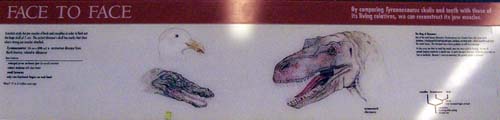
By comparing
Tyrannosaurus
skulls and teeth with those of its living relatives, we can reconstruct its jaw muscles.
Scientists study the jaw muscles of birds and crocodiles in order to flesh out the huge skull of
T. rex
. The extinct dinosaur's skull has marks that show where strong jaw muscles attached.
Tyrannosaurus
(tih-ran-o-
SOR
-rus): a carnivorous dinosaur from North America, related to
Allosaurus
New features:
- enlarged areas on lower jaw for muscle insertion
- robust skeleton with stout bones
- small forearms
- only two functional fingers on each hand
When? 71 to 65 million years ago
The King of Dinosaurs
One of the most famous dinosaurs,
Tyrannosaurus rex
is known from only seven fossil skeletons. It had powerful hind legs and jaws, and long, serrated teeth -- which sliced through flesh like steak knives. This therapod was a fierce predator, as well as a scavenger.
Its tiny arms, too short to reach the mouth, were not very useful in feeding. But not all animal features evolved for a specific use. In early therapod dinosaurs, hindlimbs grew twice as fast as forelimbs. Because
T. rex
is so enormous, this growth pattern is extreme!
PICTURE CAPTIONS:
- tyrannosaurid Albertosaurus
- Diagram showing common ancestry and evolution of crocodiles, Tyrannosaurus , and birds from organisms with vocalization, breathing while running, and parental care. Evolution of Tyrannosaurus and birds is where a stiff tail and three functional fingers on hand branch off.
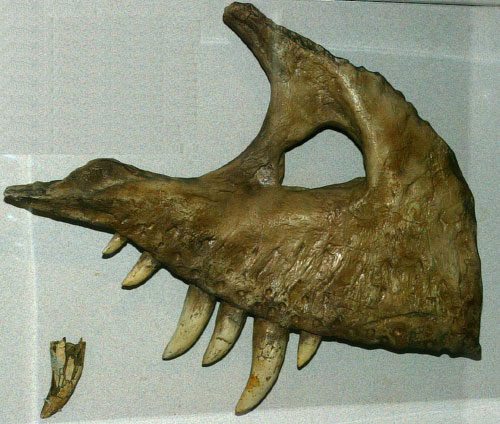
Picture of Cal Academy Fossil -- part of original Life Through Time Display. Approximately 3-foot long segment.