GOING TO SEA
The image below is a photo of the exhibit panel. Following it is a transcript of the panel.
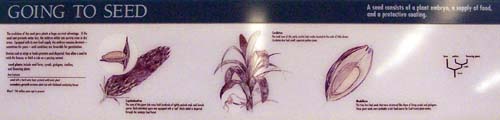
A seed consists of a plant embryo, a supply of food, and a protective coating.
The evolution of the seed gave plants a huge survival advantage. If the seed coat prevents water loss, the embryo within can survive even in dry areas. Equipped with its own food supply, the embryo remains dormant -- sometimes for years -- until conditions are favorable for germination.
Devices such as wings or hooks promote seed dispersal; they allow a seed to catch the breeze, or hitch a ride on a passing animal.
seed plants
include seed ferns, cycads, ginkgoes, conifers, and flowering plants
New features:
- seed with a hard outer layer protects embryonic plant
- secondary growth increases plant size with thickened conducting tissues
When? 240 million years ago to present
PICTURE CAPTIONS:
-
Lepidodendron
The cone of this giant club-moss held hundreds of tightly packed male and female spores. Each individual spore was equipped with a "sail" which aided in dispersal through the swampy Coal Forest. -
Cordiates
The seed cone of this early conifer had ovules located at the ends of little shoots. Cordiates also had small, separate pollen cones. -
Medullosa
This tree fern had seeds that were structured like those of living cycads and ginkgoes. These giant seeds were probably a rich source for Coal Forest plant-eaters. - Diagram showing common ancestry and evolution of ferns, conifers, and flowering plants from organisms with leaves. Evolution of conifers and flowering plants is where seeds branch off.