GRASS GUZZLERS
The image below is a photo of the exhibit panel. Following it is a transcript of the panel.
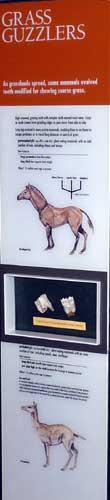
As grasslands spread, some mammals evolved teeth modified for chewing coarse grass.
High-crowned, grazing teeth with complex tooth enamel resist wear. Cusps on tooth crowns form grinding ridges as jaws move from side-to-side.
Long legs evolved in many prairie mammals, enabling them to run faster to escape predators or to travel long distances in search of grass.
perissodactyls
(per-
ISS
-o-dak-tils): plant-eating mammals with an odd number of toes, including rhinos and horses
New features:
- large premolars chew like molars
- long third toe supports body weight
When? 55 million years ago to present
artiodactyls
(art-ee-o-
DAK
-tils): plant-eating mammals with an even number of toes, including camels, deer, and bison
New features:
- long third and fourth toes support body weight
- jaw joint high on the skull increases the leverage of chewing muscles
When? 55 million years ago to present
Eat and Run!
A ruminant stomach, which evolved in some artiodactyls, extracts more nutrients from grasses. It is an important feature for a grazer that may need to flee from a predator at any moment. After it has been chewed and swallowed, grass ferments in a complex system of stomach pouches, and can be brought back to the mouth for a second chew later, when the danger has passed.
PICTURE CAPTIONS:
- Neohipparion
- Procamelus
- Diagram showing common ancestry and evolution of rhinos/horses, camels/deer, and elephants from organisms with a unique ear structure.