HEADLINES
The image below is a photo of the exhibit panel. Following it is a transcript of the panel.
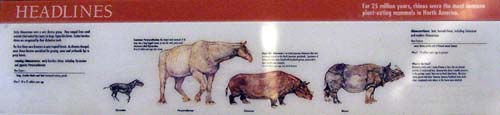
For 25 million years, rhinos were the most common plant-eating mammals in North America.
Early rhinoceroses were a very diverse group. They ranged from small animals (that looked like tapirs) to large, hippo-like forms. Extinct hornless rhinos are recognized by their distinctive teeth.
The first rhinos were browsers in semi-tropical forests. As climates changed, some rhinos became specialized for grazing, some used prehensile lips to grasp leaves.
running rhinoceroses:
early hornless rhinos, including
Hyracodon
and gigantic
Paraceratherium
.
New feature:
-
long, slender limbs and feet
increased running speeds
When? 40 to 23 million years ago
rhinocerotines:
later, horned rhinos, including
Teleoceras
and modern rhinoceroses
New feature:
-
nose horn
on the end of
fused nasal bones
When? 12 million years ago to present
Where's the Horn?
Rhinoceros horns aren't made of bone or horn, but are formed entirely of compressed hair. because hair doesn't usually preserve in the geologic record, there are no fossil rhino horns. We know which species had them, however, because fossilized rhino skulls show roughened areas where, in life, horns were attached.
Enormous
Paraceratherium
, the largest land mammal of all time, was a long-legged runner, as was the swift, pony-sized rhinoceros called
Hyracodon
.
40 to 23 million years ago; Asia, Europe
Hippo-like
Teleoceras
, is an extinct grazing rhinoceros that once lumbered around on the North American grasslands. Specimens of
Teleoceras
have been found with fossilized grasses perserved in their mouths and stomachs.
12 to 4 million years ago; Asia, North America
PICTURE CAPTIONS:
- Hyracodon
- Paraceratherium
- Teleoceras
- Diceros