JAWS
The image below is a photo of the exhibit panel. Following it is a transcript of the panel.
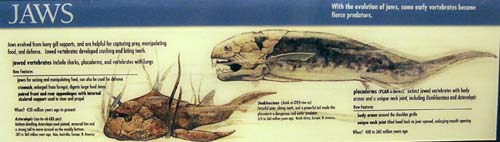
With the evolution of jaws, some early vertebrates became fierce predators.
Jaws evolved from bony gill supports, and are helpful for capturing prey, manipulating food, and defense. Jawed vertebrates developed crushing and biting teeth.
jawed vertebrates
include sharks, placoderms, and vertebrates with lungs
New features:
- jaws for seizing and manipulating food, can also be used for defense
- stomach , enlarged from foregut, digests large food items
- paired front and rear appendages with internal skeletal support used to steer and propel
When? 430 million years ago to present
placoderms
(
PLAK
-o-dermz): extinct jawed vertebrates with body armor and a unique neck joint, including
Dunkleosteus
and
Asterolepis
New features:
- body armor around the shoulder girdle
- unique neck joint , tilted head back as jaws opened, enlarging mouth opening
When? 408 to 360 million years ago
PICTURE CAPTIONS:
-
Asterolepis
(ass-ter-oh-
LEE
-piss)
Bottom-dwelling Asterolepis used jointed, armored fins and a strong tail to move around on the muddy bottom.
385 to 360 million years ago; Asia, Australia, Europe, N. America -
Dunkleosteus
(dunk-el-
OSS
-tee-us)
Forceful jaws, slicing teeth, and a powerful tail made this placoderm a dangerous mid-water predator.
370 to 360 million years ago; North Africa, Europe, N. America