LEG UP ON EVOLUTION
The image below is a photo of the exhibit panel. Following it is a transcript of the panel.
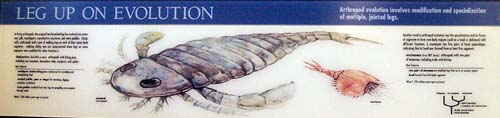
Arthropod evolution involves modification and specialization of multiple, joined legs.
In living arthropods, the original two-branched leg has evolved into antennae, gills, mouthparts, reproductive structures, and swim paddles. (Originally, arthropods had a pair of walking legs on each of their many body segments; walking ability was not compromised when legs on some segments were modified for other functions.)
chelicerates
(keh-
LISS
-er-ates): arthropods with biting jaws, including sea scorpions, horseshoe crabs, scorpions, and spiders
New features:
- mouthparts include biting jaws (chelicerae) for shredding and manipulating food
- terminal paddle, spine or stinger for swimming, digging, predation, or defense
- swim paddles modified from back legs for propelling sea scorpions through water
When? 500 million years ago to present
Another trend in arthropod evolution was the specialization and/or fusion of segments to form new body regions (such as a head or abdomen) with different functions. A crustacean has five pairs of head appendages indicating that its head was formed from at least five segments.
crustaceans
(krus-
TAY
-shunz): arthropods with two pairs of antennae, including crabs and shrimp
New features:
- two pairs of antennae are modified legs that serve as sensory organs
- head formed from five body segments
When? 550 million years ago to present
PICTURE CAPTIONS:
- eurypterid (sea scorpions)
- crustacean
- Diagram showing common ancestry and evolution of Peripatus, sea scorpions, and crustaceans from organisms with flexible external skeleton and lateral appendages. Evolution of sea scorpions and crustaceans is where jointed appendages and exoskeleton with hardened plates branch off.