SEEDS OF CHANGE
The image below is a photo of the exhibit panel. Following it is a transcript of the panel.
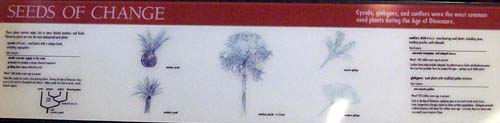
Cycads, ginkgoes, and conifers were the most common seed plants during the Age of Dinosaurs.
These plants survive today, but in more limited numbers and kinds. Flowering plants are now the most widespread seed plants.
cycads
(
SY
-kads): seed plants with a unique trunk, including sago palms
New features:
- double vascular supply to the ovule
- presence of cycasin, a unique chemical compound
- girdling leaf traces within the trunk
When? 300 million years ago to present
Palm-like cycads are coarse, slow-growing plants. During the Age of Dinosaurs, they grew as far north as Greenland and Siberia. Today, cycads live only in warm, mostly tropical regions.
conifers
(
KON
-ih-ferz): cone-bearing seed plants, including pines, monkey puzzles, and redwoods
New feature:
- narrowly triangular, awl-shaped leaves
When? 300 million years ago to present
Conifers living today include redwoods, the tallest trees on Earth, and bristlecone pines, the trees that probably have the longest life span -- perhaps up to 5000 years!
ginkgoes:
seed plants with modified pollen structure
New feature:
- non-saccate pollen
When? 225 million years ago to present
Early in the Age of Dinosaurs, ginkgoes grew as far north as the Arctic Circle. Later, temperature changes wiped out these northern populations. Ginkgoes survive in North America until about five million years ago. Currently, they are native only to a small area in eastern China.
PICTURE CAPTIONS:
- ancient cycad
- modern cycad
- monkey puzzle - no change
- ancient ginkgo
- modern ginkgo
- Diagram showing common ancestry and evolution of cycads, ginkgoes, conifers, and flowering plants from organisms with seeds and secondary growth. Evolution of ginkgoes, conifers, and flowering plants is where compound seed cones branch off. Evolution of ginkgoes and conifers is where unique pollen branches off.