SKINS AND BONES
The image below is a photo of the exhibit panel. Following it is a transcript of the panel.
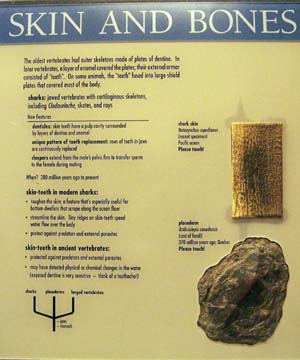
The oldest vertebrates had outer skeletons made of plates of dentine. In later vertebrates, a layer of enamel covered the plates; their external armor consisted of "teeth." On some animals, the "teeth" fused into large shield plates that covered most of the body.
Sharks:
jawed vertebrates with cartilaginous skeletons, including
Cladoselache
, skates, and rays
New features:
- Denticles skin-teeth have a pulp cavity surrounded by layers of dentine and enamel
- Unique pattern of tooth replacement rows of teeth in jaws are continuously replaced
- Claspers extend from the male's pelvic fins to transfer sperm to the female during mating
When? 380 million years ago to present
Skin-teeth in modern sharks:
- Toughen the skin; a feature that's especially useful for bottom-dwellers that scrape along the ocean floor
- Streamline the skin. Tiny ridges on skin-teeth speed water flow over the body.
- Protect against predators and external parasites.
Skin-teeth in ancient vertebrates:
- Protected against predators and external parasites
- May have detected physical or chemical changes in the water (exposed dentine is very sensitive -- think of a toothache!)
PICTURE CAPTIONS:
- Diagram showing common ancestry and evolution of sharks, placoderms, and lunged vertebrates from organisms with jaws and stomach.
-
3-D TOUCH SAMPLES:
-
shark skin
Notorynchus cepedianus (recent specimen)
Pacific Ocean -
placoderm
Bothriolepis canadensis (cast of fossil)
370 million years ago; Quebec
Learn more about how today's Great White Sharks are related to the earliest shark species ( White Death ).