THUNDERING HERDS
The image below is a photo of the exhibit panel. Following it is a transcript of the panel.
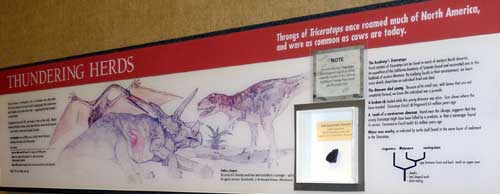
Throngs of Triceratops once roamed much of North America, and were as common as cows are today.
Horned dinosaurs (ceratopsians) such as
Triceratops
were plant-eaters. Their fossil skeletons have been found in large groups that contain many more females and juveniles than males -- suggesting that they traveled in structured herds.
Ceratopsians have neck frills, and bumps or horns on their skulls. Modern herbivores that live in herds, such as deer, also have various skull ornaments -- used mostly to attract and compete for mates.
ceratopsians
(sare-ah-
TOP
-see-unz): extinct horned dinoaurs, including
Triceratops
and
Protoceratops
New features:
- narrow beak and tall snout for cropping and holding plants
- horns for combat with competitors for mates and, perhaps, defense against predators
- bony frill protected head and neck, increased area for jaw muscle attachment
When? 95 to 65 million years ago to present
The Academy's
Triceratops
Fossil remains of
Triceratops
can be found in much of western North America. An expedition of the California Academy of Sciences found and excavated one in the badlands of eastern Montana. By studying fossils in their environment, we learn many details about how an individual lived and died.
The dinosaur died young.
Because of its small size, with bones that are not completed formed, we know this individual was a juvenile.
A broken rib
healed while this young dinosaur was alive. Scar shows where the bone mended.
Triceratops
(fossil rib fragment) 65 million years ago
A tooth of a carnivorous dinosaur
, found near the ribcage, suggests that the young
Triceratops
might have been killed by a predator, or that a scavenger found its carcass. Carnosauria (fossil tooth) 65 million years ago
Water was nearby
, indicated by turtle shell found in the same layer of sediment as the
Triceratops
.
PICTURE CAPTIONS:
-
Finders, Keepers
The carcass of a Triceratops would have been irresistible to a scavenger -- such as this gigantic pterosaur, Quetzalcoatlus , or the therapod dinosaur, Albertosaurus . - Diagram showing common ancestry and evolution of stegosaurs, Maiasaura, and ceratopsians from organisms with cheeks, leaf-shaped teeth, and plant-eating. Evolution of Maiasaura and ceratopsians is where a gap between front and back teeth on upper jaws branches off.