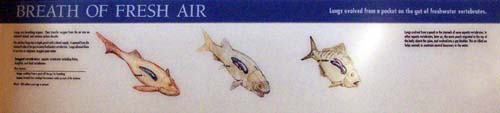
Lungs evolved from a pocket on the gut of freshwater vertebrates
Lungs are breathing organs. They transfer oxygen from the air into an animal's blood, and remove carbon dioxide.
The earliest lung was a single pouch with a blood supply. It opened from the stomach-side of the gut in some freshwater vertebrates. Lungs allowed them to survive in stagnant, oxygen-poor water.
lunged vertebrates: aquatic vertebrates including fishes, lungfish, and land vertebrates
New features:
- lungs, modified from a pouch off the gut, for breathing
- bones, formed from cartilage forerunners, make up most of the skeleton
Lungs evolved from a pouch in the stomach of some aquatic vertebrates. In other aquatic vertebrates, later on, the same pouch migrated to the top of the body, above the spine, and evolved into a gas bladder. This air-filled sac helps to maintain neutral buoyancy in the water.
PICTURE CAPTIONS:
- stomach
- lung
- gas bladder